Case Study 01
The Irish Times
Redesigning the mobile experience of Ireland's leading news publisher and creating a new audio platform for readers who prefer to listen.
- Role
- Product Designer
- Areas
-
UX Design
Information Architecture
Front-end Development - Years
- 2017–2020
Overview
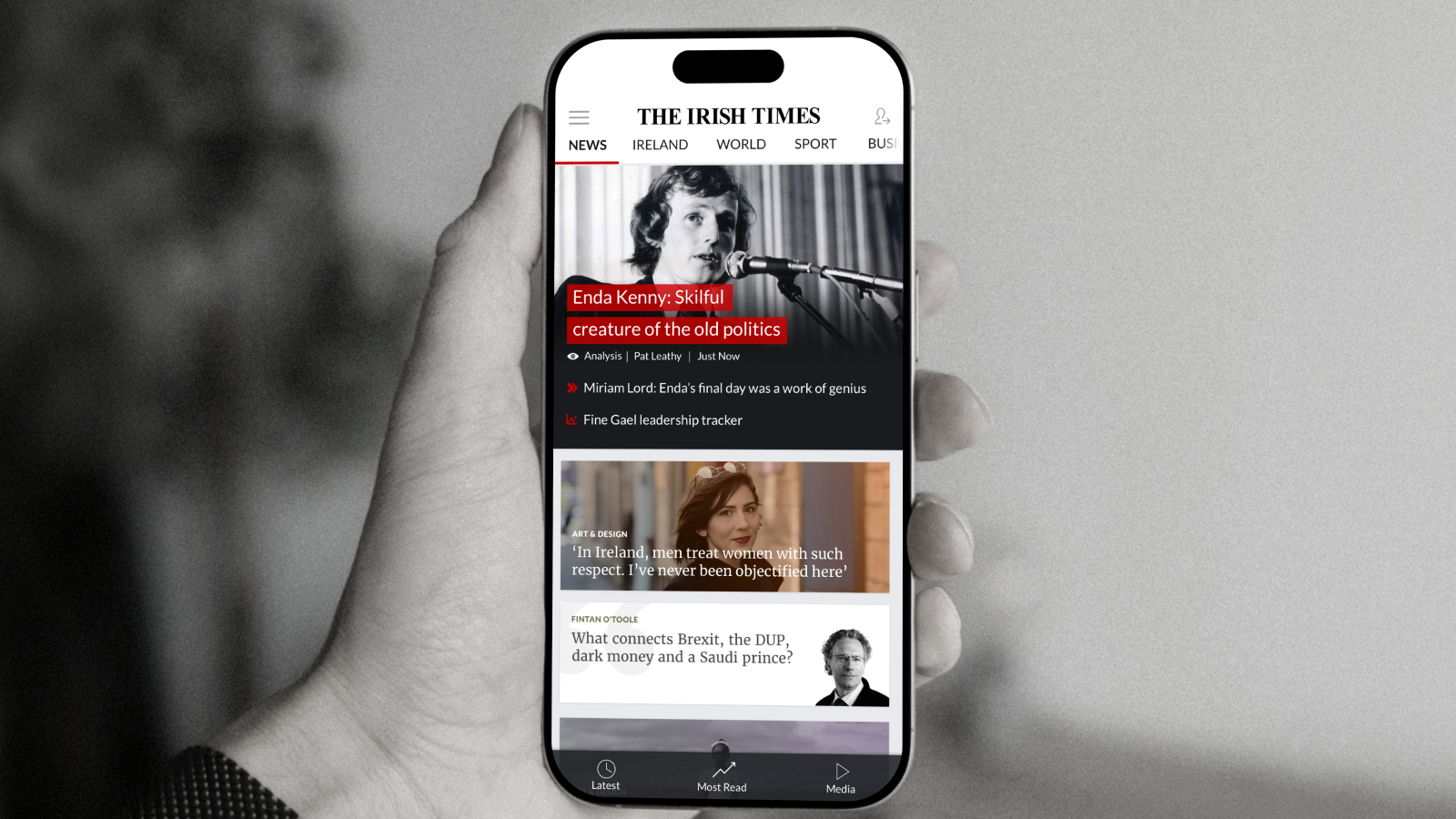
Between 2017 and 2020 I worked on a number of initiatives focused on improving the mobile experience and expanding digital consumption channels for The Irish Times.
The work spanned UX design, information architecture, front-end development, design systems and user research, helping modernise a legacy publishing platform while introducing new ways for audiences to consume journalism.
Mobile Experience Redesign
The Challenge
The existing mobile experience had evolved from a desktop-first architecture and had become increasingly difficult to maintain, slow to load and inconsistent across platforms.
Our objective was to create a faster, cleaner and more cohesive experience across Mobile Web and Native App while preserving the trust associated with a heritage news brand.
Data-Driven Discovery
Qualitative and quantitative data highlighted immediate structural issues while broader market research identified changing consumption habits and new opportunities for growth.
Systems & Architecture
Rather than rebuilding the platform from scratch, we adopted an adaptive approach that leveraged existing infrastructure and content pipelines.
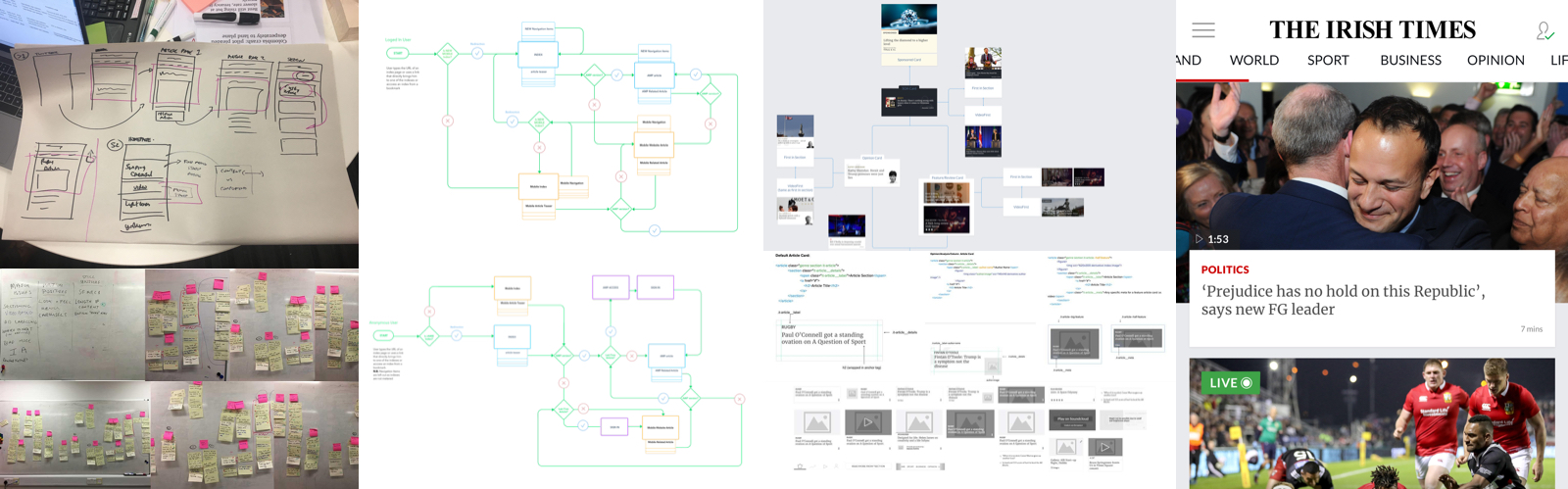
I designed a modular design system, authored BEM-based CSS architecture and produced technical documentation supporting AMP implementation and multiple user journeys.
Validation & Iteration
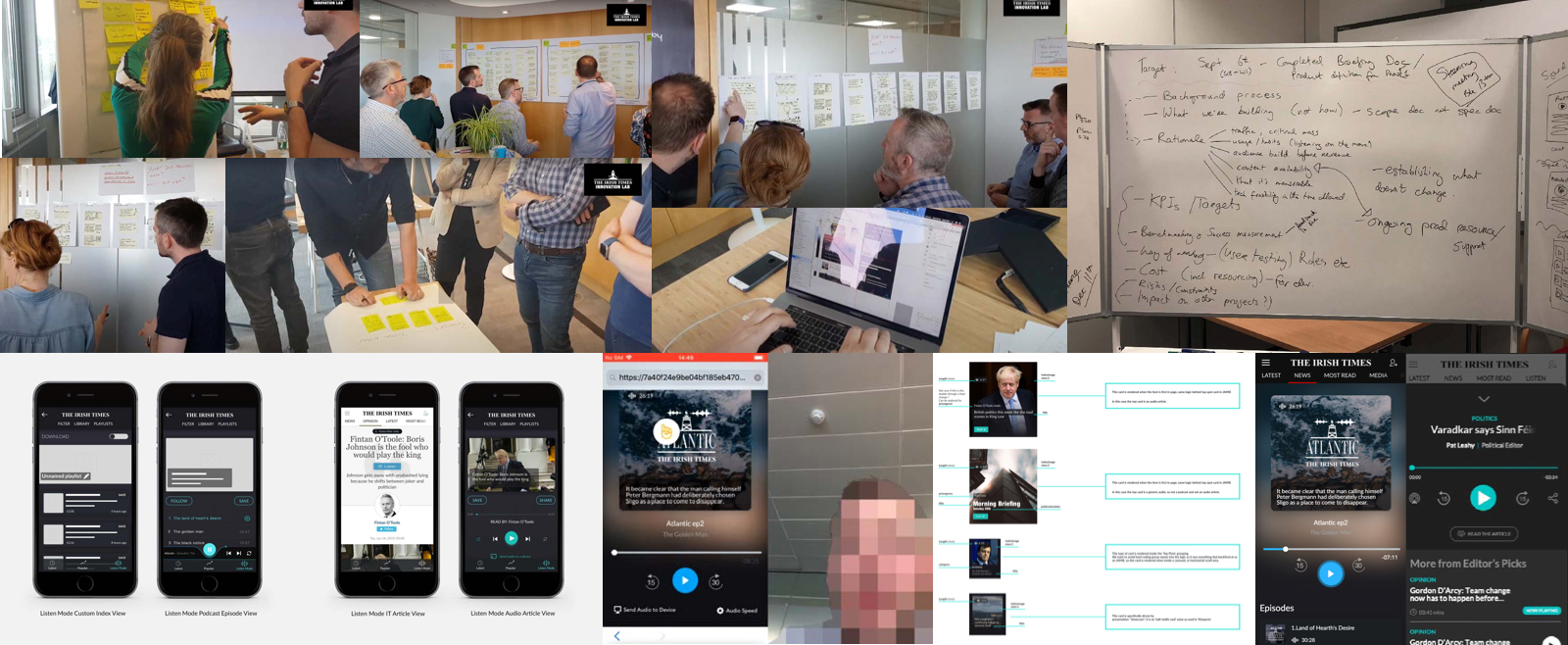
Moving a legacy publisher towards a more user-centred model required extensive testing, workshops, interviews and iterative refinement.
Through affinity mapping and continuous feedback loops we refined navigation structures, content hierarchy and feature design.
Outcome
The redesigned experience improved mobile engagement and provided a more scalable foundation for future product development.
Beyond the product itself, the initiative played an important role in introducing Agile delivery practices and Design Thinking methods within the organisation.
Irish Times Listen
The Opportunity
With the rapid rise of spoken-word content, The Irish Times identified an opportunity to create a dedicated audio experience directly within its digital ecosystem.
Data-Driven Strategy
Development was heavily informed by Reuters Institute research showing exceptionally high audio consumption in Ireland compared with neighbouring markets.
Validation & The Filter Bubble
Across four iterative rounds of testing we explored user expectations around audio content, personalisation and discovery.
A recurring insight was the tension between personalised recommendations and editorial authority. Users valued relevance but actively wanted to avoid being trapped in an information bubble.
Iterative UI & Architecture
To compete with dedicated podcast applications, the experience needed to feel instantly familiar while remaining integrated within the wider product ecosystem.
Outcome
The final platform integrated podcasts and narrated articles into a seamless publishing experience, opening new opportunities for engagement and subscription growth.
Reflection
This project shaped much of how I approach product design today.
Working within a large publishing organisation reinforced the importance of balancing user needs, editorial priorities, technical constraints and business objectives.
It also demonstrated that meaningful digital transformation requires organisational change as much as product change.